
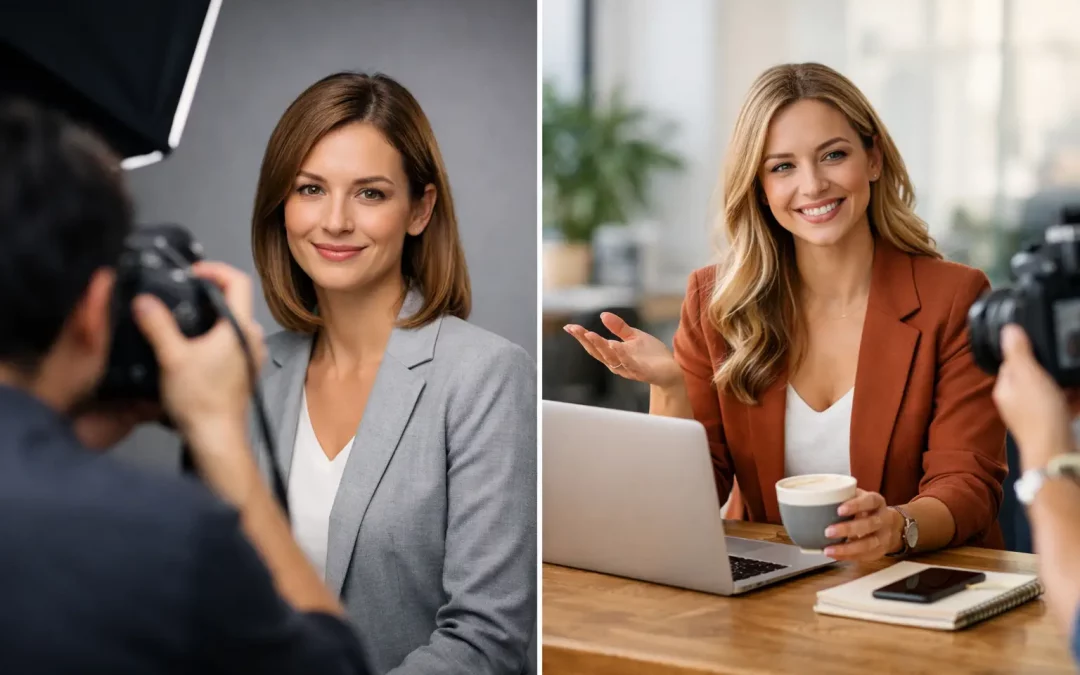
A smart portrait can change the way people meet you before you have said a word. But when choosing headshots or branding photos, many London professionals and business owners are unsure which will give them the best return. The answer is not simply about budget or how many images you receive. It is about what the photographs need to do for you.
A headshot creates a clear, confident introduction. Branding photography tells a broader story about your work, personality and business. Both can be beautifully polished, and both should still feel like you. The right choice depends on where your images will appear and what you want someone to understand when they see them.
What a professional headshot is designed to do
A professional headshot is a focused portrait, usually framed from the shoulders or chest upwards, with your face as the undisputed centre of attention. It is designed for recognition, trust and a strong first impression.
For many people, this is the photograph needed for LinkedIn, a company website, speaker profile, press feature, staff directory or professional association. It gives clients, colleagues and recruiters a sense of who they will be working with. A good business headshot should feel approachable while still reflecting your level of professionalism.
The strength of a headshot is its simplicity. With a clean background, considered lighting and thoughtful direction, nothing competes with your expression. This makes it especially useful when an image will be viewed small, such as on a phone screen, in an email signature or beside a short biography.
For actors, the purpose is even more specific. A casting-ready Spotlight headshot needs to look like you on a good day, not a heavily styled version of you from five years ago. Casting professionals need to read your face quickly, see your natural type and believe that the person who arrives in the room will match the photograph.
When a headshot is the better choice
Choose a headshot if you need one excellent, versatile portrait for a professional profile or a straightforward corporate requirement. It is also ideal if you are joining a new firm, applying for a leadership role, updating an outdated LinkedIn photograph or providing consistent portraits for a team.
A headshot session can be relatively efficient, which suits busy professionals. That does not mean it should feel rushed. The best results come from having enough time to settle in, make small adjustments to posture and clothing, and capture expressions that look natural rather than fixed.
A headshot is also the sensible starting point if you do not yet have a strong professional image. It is the photograph you will use most often, and it can quietly lift the standard of every profile where you appear.
Headshots or branding photos: the key difference
Branding photos go beyond the close portrait. They show you in context: meeting a client, working at your desk, preparing a product, speaking, writing, creating, walking through your local area or simply occupying a space that feels aligned with your business.
They may include portraits, but they also include details, wider scenes and images with room for website text or social media graphics. Rather than answering only, “What do you look like?”, they answer, “What is it like to work with you?”
This distinction matters for businesses where personality is part of the service. A consultant, designer, therapist, coach, estate agent, founder or creative professional is often chosen not just for expertise, but for their manner, values and point of view. Branding photography gives potential clients more evidence of all three.
For example, a financial adviser may need a confident headshot for their LinkedIn profile, but branding images could show a welcoming consultation setting, carefully prepared paperwork and an approachable conversation. A jewellery maker might need a portrait for an About page, while their branding collection could show the making process, materials and finished pieces being worn.
The trade-off is that branding photography needs more planning. Location, wardrobe, props, timings and the intended use of each image all play a part. It is a more expansive session because it is creating a visual library, not just one standout portrait.
Choose based on where the photographs need to work
Before booking, look at the places where your current photographs appear, or should appear. If nearly every need is a profile image, a headshot is likely enough for now. If you are refreshing a website, launching a service, building regular social content or pitching for more visible work, branding photography will usually give you more useful material.
A headshot works particularly well for:
- LinkedIn and company profiles
- CVs, biographies and press requests
- Corporate team pages
- Speaker, author and podcast profiles
- Acting and casting submissions
Branding photos are often more valuable for websites with service pages, newsletters, proposals, social media, launch campaigns and personal brands. They are also useful when you are the face of your company and need fresh imagery across several channels without repeating the same portrait everywhere.
It is worth considering how often your business communicates visually. Someone who posts once or twice a year may not need a large image library. A founder sharing insight every week will soon feel limited by one headshot against a plain wall. Neither approach is inherently better. The aim is to invest in images that will genuinely be used.
Your industry changes the answer
Some roles have very clear conventions. Lawyers, accountants, senior executives and corporate teams often need consistent, polished headshots first. The priority is credibility and cohesion, especially where several people appear together on a company website.
Entrepreneurs and client-facing service providers may benefit more from branding photography, particularly if their business is built on relationships. If a client is choosing between several equally qualified professionals, images that convey warmth, clarity and confidence can make the decision feel easier.
For creative businesses, branding images can help demonstrate process as well as personality. A stylist in a studio, an architect reviewing plans, a chef in the kitchen or an interior designer in a finished space gives viewers a much clearer picture of the work than a portrait alone.
Actors should usually keep their primary focus on specialist headshots. A few additional lifestyle images may have a place on social platforms or a personal website, but they should not replace the industry-standard photographs required for casting.
Can you have both in one session?
Often, yes. This is a practical option for people who need a strong LinkedIn image but also want photographs for a website or marketing. A session can begin with clean, simple headshots and then move into more relaxed portraits and environmental images.
The key is to be realistic about time. Producing one excellent headshot allows for a tightly focused session. Creating a useful branding gallery requires changes of clothing, possible location changes and space to photograph different parts of your work. Trying to fit too much into a short appointment can leave you with images that feel hurried or repetitive.
A good photographer will help you decide what is achievable and plan around your priorities. At Henrietta Photography, that begins with understanding how and where you will use the images, so the session is tailored to your actual needs rather than a generic shot list.
Prepare for photographs that feel like you
Whether you choose headshots or branding photography, preparation should support confidence rather than create stress. Wear clothes that fit well and feel familiar. Choose colours that suit your complexion and avoid anything likely to date quickly or distract from your face.
For branding photographs, think beyond clothing. Consider the locations, objects and actions that genuinely represent your work. A laptop and notebook may make sense for a consultant; a set of tools may suit a maker. Props should add meaning, not become clutter.
Most importantly, do not feel you need to arrive knowing how to pose. Clear direction is part of a professional portrait experience. Small changes in angle, posture, eyeline and expression make a significant difference, especially for people who feel awkward in front of the camera.
The best image is rarely the most dramatic one. It is the one that looks credible, comfortable and unmistakably like you. If you need a single photograph to open professional doors, start with a headshot. If you need people to understand the person and purpose behind your business, give branding photography the space to tell that fuller story.