
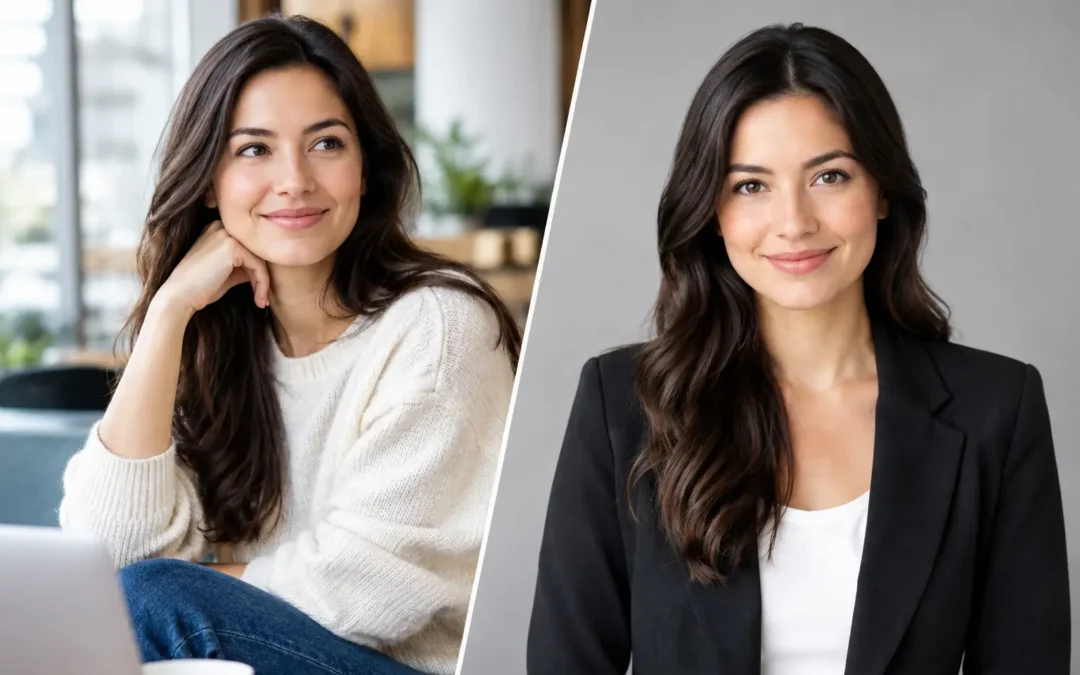
A headshot is often the first introduction someone has to you. It may sit beside a proposal, appear on a company website, introduce your expertise on LinkedIn or help a casting director decide whether to see more. That is why the choice between lifestyle versus studio headshots is about more than a preferred backdrop. It shapes the impression your image gives before you have said a word.
Both approaches can produce beautiful, professional portraits. The right one depends on what you do, who needs to trust you and where the photographs will be seen. A relaxed founder building a personal brand may benefit from the character of a real London setting. An actor submitting to casting platforms usually needs a cleaner, more focused image. The most useful question is not which style is better, but which one helps your audience see you clearly.
Lifestyle versus studio headshots: the key difference
A studio headshot is made in a controlled photographic setting, usually against a plain or carefully styled background. Light, colour, composition and expression can all be refined with great consistency. The result is polished, direct and free from distraction.
A lifestyle headshot is photographed in a real environment. This might be your office, a bright home workspace, a café corner, an architectural exterior or a calm North London street. The setting becomes part of the story. It can suggest the way you work, the atmosphere you create or the type of clients you serve.
Neither style needs to feel stiff or overly posed. In fact, the best portraits in either setting should feel like you on a particularly good day: confident, approachable and at ease. The difference is whether the image leads with your face alone or places your face within a broader sense of context.
When studio headshots are the stronger choice
Studio portraits are particularly effective when clarity and consistency matter most. They place full attention on your expression, eyes and presence, making them a dependable choice for corporate profiles, team pages, speaker bios and professional directories.
For a company with several people to photograph, a studio approach creates a cohesive look across the team. Everyone can be lit and framed in the same way, even if the sessions take place on different days. That visual consistency quietly signals organisation and professionalism, particularly for firms in law, finance, consultancy, technology and property.
Studio photography is also the natural choice for many actors’ headshots. Casting professionals need to see an actor without visual noise or a setting that suggests a role too strongly. A clean backdrop, excellent light and an honest expression allow your casting type to come through. For Spotlight headshots, this straightforwardness is a strength rather than a limitation.
There is a practical advantage, too. A studio gives us control over changing London weather, difficult office lighting and busy surroundings. If you want a calm, efficient session with predictable results, it is hard to beat. This does not mean every image must look formal. Wardrobe, background tone, framing and direction can make studio portraits feel warm, contemporary or quietly authoritative.
Studio works well if you need
A studio session is likely to suit you if the photograph must work across many formats, from a small social media profile image to a printed brochure. It is also a strong option if your brand values precision, discretion or a minimal aesthetic, or if you simply do not have a suitable location with enough natural light and visual space.
The trade-off is that a plain background communicates less about your day-to-day world. For some people, that focus is exactly the point. For others, particularly independent business owners, it can feel slightly removed from the personality behind the service.
When lifestyle headshots tell a better story
Lifestyle portraits are ideal when the environment adds genuine meaning. A therapist in a calm, welcoming consultation room, an architect in a beautifully considered space or a creative director at work can all use the setting to make their profile feel more human and specific.
This style often suits entrepreneurs, small business owners and professionals whose clients choose them personally as well as professionally. A potential client may not only be asking, “Are they qualified?” They may also be wondering, “Would I enjoy working with them?” A natural-feeling portrait can help answer that question.
The best lifestyle locations are not necessarily the most elaborate. Often, a window with soft light, an uncluttered workspace, an interesting wall or a local exterior with good depth is enough. What matters is that the setting supports rather than competes with you. A busy café, crowded office or recognisable landmark can quickly become the subject of the picture instead.
Lifestyle sessions usually offer more variety as well. Alongside classic head-and-shoulders images, we can create slightly wider portraits, walking shots or natural working moments for websites, press features and social media. This gives a personal brand a useful bank of imagery without making every photograph feel staged.
The trade-off with location photography
A lifestyle session has more moving parts. Light changes, passers-by appear, rooms can be tighter than expected and a lovely venue may have colours that do not flatter every outfit. Good planning makes a considerable difference.
It is also worth considering longevity. An image in a current office or beside a particular sign may date sooner than a studio portrait. If you rebrand, move premises or change your service direction, a neutral image may remain useful for longer. That does not rule out lifestyle photography, but it may suggest choosing a location with character rather than obvious branding.
Think first about where the headshot will live
The intended use should guide the visual decision. LinkedIn and business websites can accommodate either style, although a studio image often reads more strongly at the small sizes used on professional platforms. Editorial features and personal websites tend to give lifestyle images room to breathe, allowing background and composition to add interest.
For corporate teams, consistency is usually more valuable than individuality. For a founder-led business, the reverse can be true: clients may want to see the person and the atmosphere behind the brand. If you are updating a profile that must work everywhere, consider choosing a clean studio portrait as your core image, then adding lifestyle photographs for your website and wider marketing.
Actors should be especially careful not to confuse a lifestyle portrait with an acting headshot. A strong image of you in a beautiful location may be perfect for your personal website or social channels, but it may not meet the practical needs of casting. Your main headshot should make it easy to see your face, your energy and your playing age without unnecessary visual information.
How to make either style feel like you
The camera tends to reveal discomfort, which is why preparation should be simple and realistic. Choose clothes that fit well and feel familiar rather than saving a new outfit for the session. Solid colours and subtle texture usually photograph well. Very fine patterns, prominent logos and overly shiny fabrics can pull focus from your face.
Bring a small choice of outfits if time allows. A jacket can lend authority; removing it can make a second look feel more relaxed. Think about your usual client or audience, but do not dress as a version of yourself you would never normally be. A believable portrait earns more trust than one that is impressively styled but unrecognisable.
Expression matters just as much as setting. You do not need to hold a fixed smile. A good photographer will guide you through small shifts in posture, eye line and energy, then create enough ease for natural expressions to emerge. That direction is valuable whether you are standing against a simple studio backdrop or leaning by a window in your own workspace.
A thoughtful choice, not a fixed rule
Many clients do not need to choose only one approach. A session can begin with clean, versatile studio-style images and move into a nearby location for portraits with more atmosphere. This is particularly useful for consultants, creatives and business owners who need one confident profile photograph alongside a selection of content for their website.
At Henrietta Photography, the aim is always to create a portrait that feels polished without losing the person in it. Before the session, think about the message you want to send: calm expertise, creative energy, trusted leadership, warmth or directness. From there, the right setting becomes much easier to choose.
The best headshot is the one that makes the right person pause, look again and feel they already have a sense of who you are.