
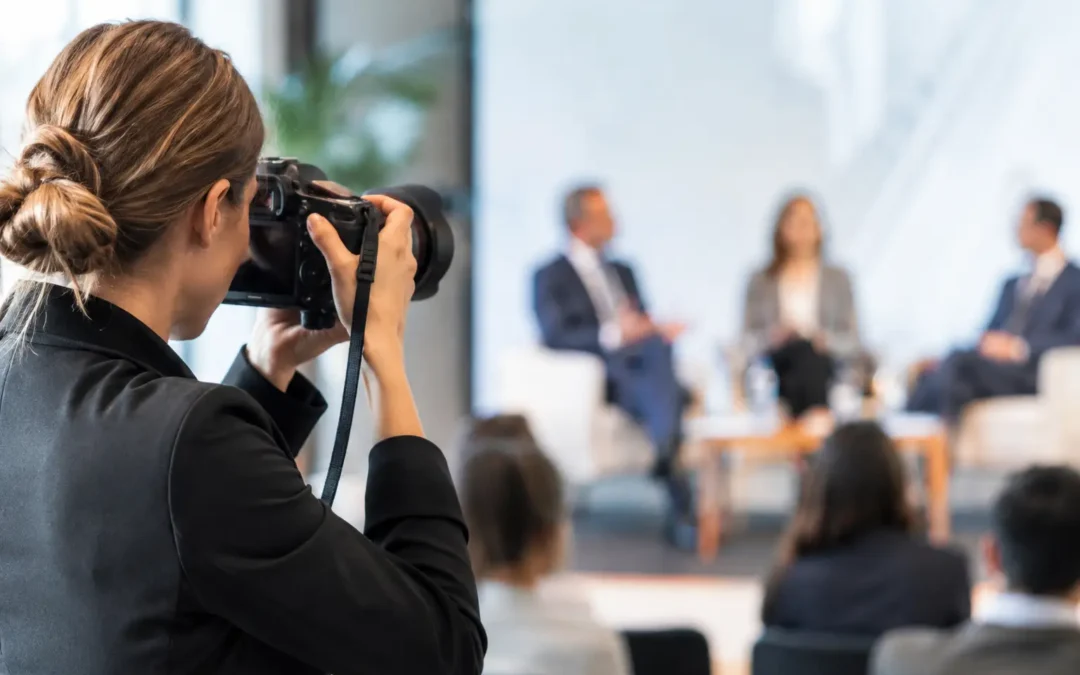
The keynote speaker has stepped on stage, the room lights have dropped, and the client would like natural images of a packed audience, smart networking and every important guest. Knowing how to photograph corporate events is less about chasing every moment and more about reading the room, working calmly and making people look their best while the event unfolds.
Corporate event photography has a practical purpose. The final gallery may be used across a company website, social channels, press coverage, recruitment material and next year’s event promotion. That means the images need to feel polished, but they also need to show genuine connection, energy and professionalism. A thoughtful plan before the first guest arrives makes all the difference.
How to photograph corporate events with a clear brief
Start with a proper conversation with the organiser. Ask what success looks like for them, not simply how many hours they need coverage for. A leadership conference, an awards dinner, a product launch and a Christmas party all have very different priorities.
Find out who the key people are, including speakers, senior leadership, sponsors and award winners. Request a running order, venue address, room layout and any brand guidelines. It is also useful to know where the finished photographs will appear. Images intended for LinkedIn or a website banner need room around the subject for cropping, while editorial coverage may call for tighter, more immediate frames.
Clarify the must-have moments in writing. These often include arrivals, registration, speaker portraits, audience reactions, networking, venue details, group photographs, award presentations and a final wide shot that shows the scale of the occasion. If there is a VIP who can only spare five minutes, schedule that portrait rather than hoping to catch them later.
This is also the moment to discuss consent and discretion. Some organisations have safeguarding, privacy or security requirements, particularly at internal meetings, financial events or events involving guests under 18. A clear brief gives everyone confidence and allows the photographer to work quietly in the background when needed.
Visit the venue before guests arrive
Arrive early enough to walk the space without pressure. Look at the main room, registration area, networking spaces and any location planned for group photographs. Notice where the daylight falls, whether the ceilings are suitable for bouncing flash, and which backgrounds look clean enough for portraits.
Event venues can be visually busy. Branded pull-up banners, half-empty glasses, cables and stacked chairs quickly distract from an otherwise excellent image. A few minutes spent choosing the right angle can turn a functional photograph into one a business is proud to use.
Check the stage lighting too. Blue or magenta spotlights may look dramatic in the room but can produce unflattering skin tones in photographs. You may decide to preserve that atmosphere for wider stage images while using a more neutral approach for close portraits. There is no single setting that suits every venue, so assess the light rather than relying on assumptions.
Prepare a kit that handles changing light
Corporate events move quickly from bright receptions to dim conference rooms and candlelit dinners. A reliable camera body, spare batteries and plenty of memory cards are essential, but lenses matter just as much. A fast standard zoom is useful when you need to move from a room-wide scene to a close interaction without interrupting it. A longer lens lets you photograph speakers and audience reactions discreetly from the side of the room.
Bring a flash with a diffuser or bounce card, but use it with care. Direct flash can make a beautifully dressed venue look flat and can feel intrusive during speeches. When the room allows, bouncing light from a neutral wall or ceiling creates a softer result. In dark spaces with high ceilings, a small off-camera light may be more effective for posed groups or award presentations.
It is worth carrying a simple backup plan: a second camera body if possible, spare flash batteries, a cloth for lenses and a small selection of memory cards rather than one large card. Events do not pause for equipment problems.
Photograph people, not just proceedings
A corporate gallery should show what happened, but its real value often lies in how the event felt. Look for warm greetings, animated conversations, attentive listening and moments of laughter. These pictures give a business useful visual material because they show culture rather than simply documenting a timetable.
Avoid photographing people mid-chew, blinking or with awkward expressions whenever you can. Wait a moment, watch the conversation and take a few frames when faces are relaxed. This is where portrait experience is particularly valuable. A flattering angle, a clear background and a quick sense of when someone looks comfortable can elevate even a candid photograph.
Be friendly without becoming a distraction. At networking events, a brief smile and eye contact can help guests feel at ease before you take the photograph. For small groups, a gentle prompt such as “just keep chatting” often produces more natural images than asking everyone to pose immediately.
Cover the event from wide to close
Think in layers. Begin with wider images that establish the venue, branding and number of attendees. Then photograph smaller groups and individual interactions. Finally, look for details: name badges, hands exchanging business cards, a carefully arranged table setting, branded signage or an award waiting to be presented.
This variety gives the client a complete visual story. A wide image alone can show a full ballroom, but it cannot capture the anticipation on a speaker’s face. A close-up portrait may be beautiful, but it needs context. Moving deliberately between these viewpoints keeps the finished gallery useful and varied.
During a keynote, do not stay fixed in one position. Photograph the speaker from a flattering side angle, then move quietly to capture the audience. Look for engaged expressions, applause and people taking notes. If the speaker is using slides, take at least one frame that includes both presenter and screen, ensuring the presentation is readable and not obscured by the subject.
Direct group photographs quickly and kindly
Group shots can be the most challenging part of corporate event photography, especially when senior people are busy and guests are eager to return to the reception. Choose the location in advance and ask the organiser to gather people before you need them.
Keep your instructions simple. Position taller people at the back, avoid placing faces directly beneath harsh overhead lights, and make sure everyone can be seen. Ask people to turn their shoulders slightly towards the centre, then look to camera. Take several frames, because someone will almost always blink.
For a large group, it helps to make your voice heard without sounding stern. A little warmth goes a long way: acknowledge that you will be quick, give one clear instruction at a time and keep the energy light. The best group photographs feel organised, not over-managed.
Work around the event rather than against it
Good event photography requires judgement. During an emotional speech, the sound of a shutter may be noticeable. During a formal dinner, crossing the room repeatedly can disrupt service. During a panel discussion, standing in front of seated guests is rarely the right choice.
Plan your movements around natural breaks. Use applause, transitions between speakers and networking intervals to change position. If you need to photograph a particular person, wait until they are not deep in conversation or eating. Being observant is part of being professional.
There is a trade-off between complete coverage and a relaxed guest experience. Not every attendee needs to appear in the gallery, and not every photograph needs to be taken close up. A smaller number of thoughtful, well-composed images is usually more valuable than hundreds of near-duplicates.
Edit for consistency and commercial use
After the event, cull firmly. Remove near-identical frames, unflattering expressions and images where backgrounds distract from the subject. Keep the photographs that best communicate the event’s atmosphere, key messages and people.
Edit with a light touch. Correct exposure, white balance and distracting colour casts, particularly under mixed venue lighting. Maintain natural skin tones and a consistent finish across the gallery. Corporate photographs should feel refined and credible, not heavily filtered.
Before delivery, check that every agreed must-have is present. Include a useful mix of landscape and portrait orientations, wider compositions for web use and tighter images for social posts. For London businesses, where events often bring together clients, colleagues and partners from across different industries, that flexibility can make the gallery work much harder after the evening is over.
The most successful corporate event photographs allow people to remember the occasion and help the organisation show others why it mattered. Arrive prepared, stay alert to the human moments, and give guests the same calm, flattering attention you would bring to a professional portrait.