
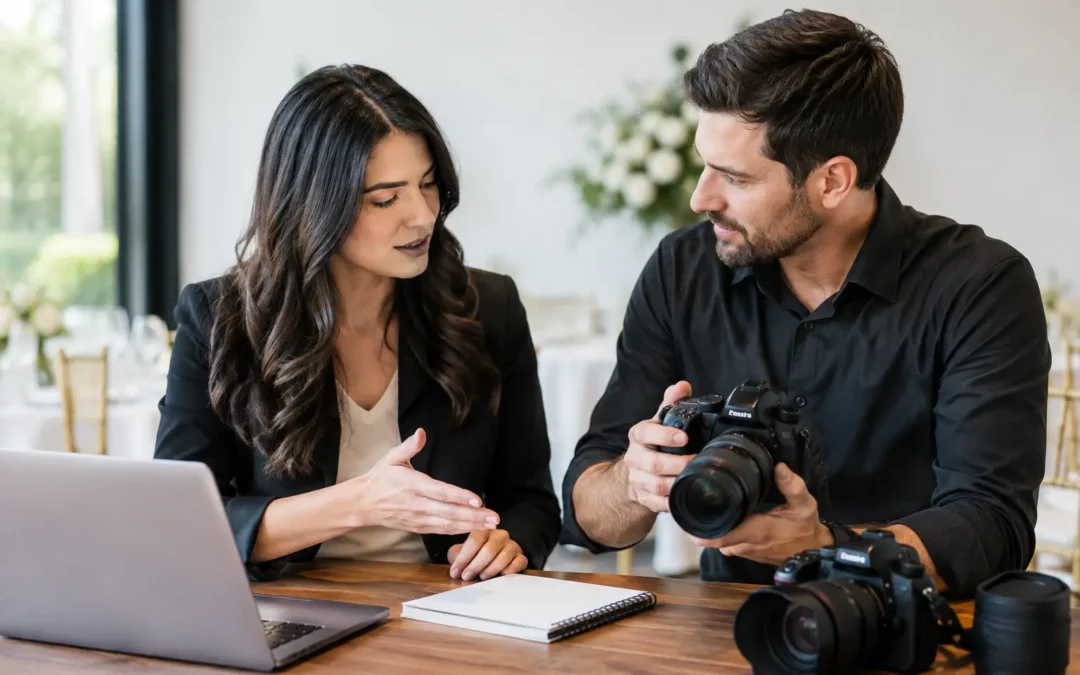
The most memorable photograph from an event is rarely the obvious one. It may be a speaker pausing before the applause, a grandparent laughing with a child, or a room full of guests finally relaxing together. Knowing how to brief an event photographer gives those moments the best chance of being noticed, while ensuring the essential images are covered too.
A good brief is not a long wish list. It is a clear, practical conversation about what matters to you, who will be there and how you want the event to feel in the finished photographs. Done well, it helps your photographer work confidently and lets you get on with hosting.
Start with the purpose of the event
Before discussing shot lists or timings, explain why you are holding the event. A corporate reception, awards evening, charity fundraiser, birthday celebration and product launch can all take place in similar venues, but the photography needs are very different.
For a business event, you may need polished images that show your team, guests, speakers and branding at their best. These photographs might later be used on your website, in press coverage, across social media or in future event marketing. For a personal celebration, the priority may be the people closest to you, the atmosphere in the room and the small details you have spent months planning.
Share the intended use of the photographs from the outset. It affects the balance between candid coverage, portraits, detail shots and wider scene-setting images. If you need space in certain images for text or a banner, say so. If your main goal is relaxed family photographs rather than formal group portraits, that is equally useful to know.
Give your photographer the essential details
Your photographer needs enough information to arrive prepared, not a folder of paperwork to decipher at the door. Send the event date, venue address, start and finish times, and a realistic schedule. Include the key moments with their expected timings, such as guest arrival, speeches, a performance, an awards presentation, cake cutting or a surprise reveal.
Venues often have restrictions that can influence the final photographs. Let your photographer know about access arrangements, parking, security, stairs, low light, flash restrictions or whether a photography permit is needed. If there is a venue contact or event coordinator on site, provide their name and mobile number.
It also helps to mention the scale of the event. Photographing an intimate dinner for 20 people calls for a different approach from covering a busy conference with several hundred attendees. The photographer can then plan suitable equipment, arrive at the right time and allow enough space for portraits or group photographs without interrupting the flow.
Share the running order, but allow for real life
A running order is particularly valuable when there are unrepeatable moments. Speakers can finish early, guests can arrive late and a room can take longer to turn around than expected, so treat timings as a guide rather than a promise.
Flag the moments that absolutely must not be missed and let your photographer know who will announce any changes on the day. A quick word before an unscheduled presentation or surprise toast can make all the difference.
Identify the people who matter most
One of the best ways to brief an event photographer is to introduce the key people in advance. Names are helpful, but context is better. Rather than simply listing “James Smith”, explain that he is the founder giving the opening speech, or that she is your aunt who has travelled from abroad and should be photographed with the family.
For corporate events, identify senior leaders, keynote speakers, sponsors, clients and anyone who needs to appear in the final gallery. If people are difficult to recognise from a written description, share a small number of reference photographs privately before the event. This is far more useful than hoping a photographer will spot every important guest in a crowded room.
For celebrations, think about relationships as well as individuals. You may want natural images of grandparents with grandchildren, siblings together, or friends who have not seen one another for years. A photographer with portrait experience can create these moments sensitively, but only if they know their significance.
Keep formal group shots focused
Group photographs are often the part of an event that needs the most organisation. They can be lovely and meaningful, but an ambitious list can quickly take 30 minutes out of a party or reception.
Choose the combinations that will genuinely matter in years to come and nominate one person who knows the guests to gather everyone. Allow five to ten minutes in the schedule, preferably before people disperse or after they have found the bar. If the event is informal, a few well-planned groups may be enough, with the rest captured naturally.
Describe the feeling you want the photographs to have
Words such as “natural” and “candid” are useful, but they can mean different things. Be more specific about the mood you are hoping for. Do you want refined, editorial-looking images for a formal dinner? Warm, lively photographs of guests enjoying themselves? A discreet documentary approach where the photographer blends into the background? Or a mixture of all three?
Share a few examples of photography you like, especially if they show a particular composition, use of light or level of formality. Reference images should communicate preference, not become a shot-by-shot instruction. Every venue, guest list and event has its own character, and a good photographer will respond to what is actually happening rather than copy a picture taken somewhere else.
It is worth discussing how visible you would like the photographer to be. At a conference, it may be appropriate for them to move close to the stage and direct a few portraits. At a private supper or sensitive charity event, a quieter presence may be more suitable. Neither approach is better – it depends on the occasion and the people in the room.
Make the must-have list short and useful
A must-have list is there to protect the genuinely essential images, not to dictate every frame. The most effective lists tend to include specific people, key moments, venue details and branding requirements.
For example, you may need a clear photograph of each award winner receiving their prize, a group portrait of the leadership team, images of sponsors’ signage, and natural guest interaction during the drinks reception. For a birthday, your priorities might be the host with close family, the cake, the toast and a full-room photograph before the evening becomes more relaxed.
Avoid asking for a fixed number of images from each part of the event. Photography is responsive: one speech may produce a wonderful reaction from the audience, while another may be visually quieter. Give your photographer clear priorities, then the freedom to look for the unexpected images that make a gallery feel alive.
Plan for good light, good backgrounds and a little time
You do not need to redesign an event for photography, but a few thoughtful choices can improve the results considerably. If you would like portraits of guests, choose an uncluttered area with attractive light where possible. Near a large window can be beautiful during daylight hours; in the evening, a well-lit corner away from heavy footfall often works well.
If there is branding, check that it is clean, straight and positioned where people can stand in front of it comfortably. Consider what will appear behind speakers or award recipients too. A stack of spare chairs, catering equipment or an open service door can distract from an otherwise excellent image.
Build in a little breathing room. Even ten minutes with the host, a speaker or a senior team can create polished portraits that would be hard to achieve once the event is in full swing. Henrietta Photography often finds that this small allowance gives clients images that feel both relaxed and considered.
Cover permissions and sensitivities early
Events can involve privacy considerations, particularly where children, clients, high-profile guests or vulnerable people are attending. Tell your photographer about any guests who should not be photographed, or images that must not be shared publicly. It is much easier to work discreetly with this information from the beginning.
For business events, clarify who will approve images and whether any branding or communications guidelines apply. If guests will be photographed for promotional use, your organiser may need to make this clear in invitations or signage. Your photographer can advise on practical coverage, but the event host remains best placed to manage attendee expectations.
Agree the practical finish before the event begins
Confirm how long photography coverage is required, when you would like the photographer to arrive, and whether there is a particular moment that marks the end of the job. Late-night dancing, for example, may be important for a party but unnecessary for a daytime seminar.
Discuss delivery expectations as well. If a press image or a selection for social media is needed quickly, say so before the event. Editing is where a consistent, polished final collection comes together, and clear expectations help everyone plan properly.
A well-briefed photographer is not there merely to record a timetable. They are there to notice the expression, connection and atmosphere that cannot be scheduled. Give them the important facts, point them towards the people and moments you care about, then trust them to observe. That is how an event gallery becomes something you will be pleased to return to long after the room has been cleared.